KX-03The Engine Room · Backend Development
Backend development, APIs and integrations
The clever stuff behind the curtain. The backend is the part nobody sees until it goes wrong. We build the databases, APIs, integrations and automation that keep information correct, systems talking to one another and operations running while everyone is asleep.
Parts list
What we do
Databases, APIs, integrations, automation and infrastructure. The quiet machinery that keeps data correct, systems talking and operations running while nobody is watching.
- KX-03.01
Databases and data models
Schemas that reflect the business, with integrity rules, migrations and query performance considered from the beginning.
- KX-03.02
APIs
Well-documented, versioned interfaces for your own applications and for partners, with sensible authentication and limits.
- KX-03.03
Application architecture
Clear separation of responsibilities so the system can be understood, tested and changed by people who did not write it.
- KX-03.04
Integrations
Payments, accounting, CRM, messaging and the other services a business relies on, connected so data flows without re-keying.
- KX-03.05
Security
Authentication, authorisation, input validation, secrets management and sensible defaults, treated as part of the build rather than an afterthought.
- KX-03.06
Automation and infrastructure
Scheduled jobs, queues, webhooks and deployment pipelines, with logging and monitoring so problems are noticed early.
KX-03 · Inside the machine
The Engine Room
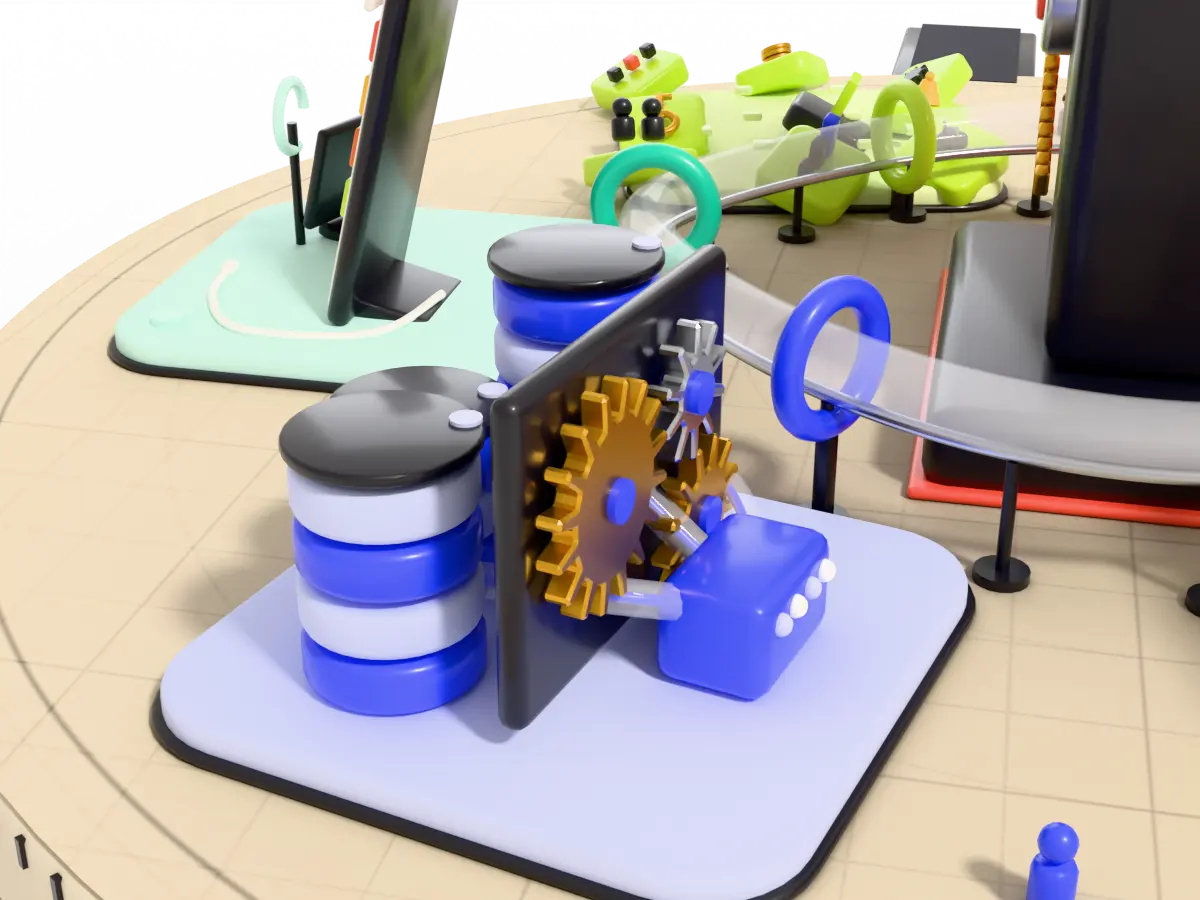
On our home page this module is a working part of the Klixix Contraption. Switch it on, pull the lever and watch it do its job.
See it workingWhy it matters
What this means for the business
Data is the business
Orders, customers, invoices and stock are only useful if they are right. A sound backend protects the truth.
Every manual step is a risk
Copying data between systems is slow and error-prone. Integration and automation remove whole categories of mistakes.
Change is constant
A well-structured backend lets you add a partner, a product line or a market without starting again.
How an engagement could run
How a backend project runs
Every project is different, so treat this as the usual shape rather than a fixed recipe. You will always know which station we are at and what comes next.
Look closely
We map the systems you have, how data moves between them today and where it breaks or gets typed in twice.
Shape it
Architecture, data model and integration plan, including the security and failure cases, agreed before building.
Build it
Tested services and integrations delivered in stages, with documentation written alongside the code.
Keep it running
Monitoring, maintenance and improvements, or a clean handover to your own team.
Evidence
Backend Development: what we have built and written
Work we designed and built, and practical guides we wrote, so you can judge how we think before we talk.
- Renttix, a Klixix companyRental management software we built and run: quotes, contracts, e-signatures, dispatch, payments, invoicing and accounting sync in one product.
- Why Renttix is built around one hire recordThe data-model decision behind a product that carries work from quote to invoice.
- What “multi-tenant” really meansHow a SaaS product keeps customers apart, and why the decision matters early.
Linkage
How it connects to the rest of the machine
Most good ideas need more than one module. Here is how this one meshes with the others.
Try combining themQuestions
Backend development FAQs
Can you integrate with the software we already use?
If it has an API or a reliable export, usually yes. We check the documentation and limits first and tell you honestly if something will be awkward.
Do you host the systems you build?
We can set up and manage infrastructure on established cloud providers, or deploy into your own accounts so you keep control.
What happens if something fails at 3am?
We design for failure: retries, alerts and logs that explain what happened. Ongoing support arrangements are agreed per project.
Last stop on the line
Got a wild idea? Good.
We like the ones that look impossible. Tell us what you are trying to build and we will tell you, honestly, how we would approach it.